

Coin Trading Guide for Nigerian Investors
🚀 Explore coin trading in Nigeria with tips on how to start safely, spot risks, use local platforms, and navigate regulations for better ₦ investments.
Edited By
Edward Collins
Trading indices provide a straightforward way for Nigerian investors to gain exposure to the stock market without buying individual shares. Instead of picking each company separately, you buy into a basket of stocks bundled into an index, like the Nigerian Stock Exchange All-Share Index or the US S&P 500. This diversifies your investment, reducing the risk linked to single stocks’ price swings.
Indices track the overall performance of selected companies in a market or sector. For instance, the NGX All-Share Index is a benchmark for Nigerian equities, reflecting the health of the Nigerian economy via listed firms. Foreign indices like the Dow Jones or FTSE 100 offer access to international markets, helping you spread your portfolio beyond local boundaries.

Trading indices can be less volatile and easier to manage compared to individual stocks, making them attractive for investors who prefer broad market participation.
When you trade indices, you buy or sell contracts based on the index value rather than buying individual shares. These contracts often come as futures, exchange-traded funds (ETFs), or contracts for difference (CFDs). In Nigeria, brokers provide access to such products linked to both local and global indices through platforms like MTN Securities, GTI Securities, or international brokers serving Nigerian clients.
Diversification: Avoid putting all your money on a single company or sector.
Reduced risk: Indices tend to smooth out extreme price changes found in single stocks.
Cost-efficiency: Trading a single instrument covers multiple stocks.
Market exposure: Gain insight into economic trends in sectors or geographies without complicated portfolio management.
Successful index trading also demands awareness of risks, including market swings tied to political events, naira fluctuations, and economic shifts locally and globally.
To start trading indices in Nigeria:
Choose a regulated broker offering indices trading.
Understand the products: ETFs, futures, or CFDs.
Familiarise yourself with market hours, especially for foreign indices.
Use demo accounts to practice strategies, focusing on stop-loss orders to manage risk.
With proper tools and knowledge, trading indices can add valuable diversification to your investment plan, positioning you to navigate Nigerian and global financial markets more confidently.
Trading indices involves buying or selling instruments that track a group of stocks, rather than investing in individual companies. This approach gives Nigerian investors a practical way to access the overall performance of a sector or the broader market without the need to select single stocks. Understanding what trading indices means is essential because it highlights how investors can spread risk, capitalise on market trends, and diversify their portfolios more efficiently.
What an index represents: At its core, a stock market index is a statistical measure that reflects the collective price movements of a selected group of stocks. These stocks usually represent a specific market segment, industry, or a country's leading companies. For instance, the Nigerian Exchange’s All-Share Index (ASI) tracks the performance of all listed equities on the NGX, offering a snapshot of the Nigerian stock market’s direction. Essentially, indices serve as barometers of economic health by showing whether prices are generally rising or falling.
Examples of major global indices: Globally, some indices have gained recognition for setting investment standards. The S&P 500 in the United States, which tracks the 500 largest companies listed on US exchanges, is often seen as a benchmark for the American economy. Similarly, the FTSE 100 reflects the performance of the largest firms on the London Stock Exchange. Nigerian investors often look to these indices to gauge global economic trends, which can influence local market behaviour. For example, a decline in the S&P 500 may signal risk-off sentiment worldwide, possibly affecting Nigerian stocks.
Diversification benefits: Trading an index provides instant diversification because you’re effectively investing in a basket of stocks at once. Instead of putting all your funds into one company, index trading spreads your exposure across multiple firms. This reduces the impact if one company’s shares take a tumble. For instance, if banking stocks in the NGX sector index drop while consumer stocks rise, an index representing a broader market could balance out such swings to some extent.
Market trend reflection: Indices mirror overall market trends rather than company-specific events. When you track an index like Nigeria’s ASI, you’re following broad economic factors like interest rate changes, inflation, or political developments that affect many businesses. This makes indices useful for investors wanting to speculate on or hedge against general market movements without getting caught up in the ups and downs of a single stock. For example, during a period of strong economic growth, indices often rise as most companies report better earnings.
Trading indices allows you to step back from the noise of individual stock swings and focus on bigger market patterns, which can be particularly helpful amid Nigeria’s often volatile economic climate.
By understanding these fundamentals about what indices represent and how they differ from individual stocks, Nigerian investors can make more informed choices about adding indices to their trading strategies. It opens up opportunities for diversified investment with a clearer view of market performance.
Knowing which stock market indices to follow is key for Nigerian investors who want to understand market movements without tracking every single stock. Indices give a snapshot of overall market performance and economic sentiment, helping traders decide where to put their money. Both global and local indices offer valuable perspectives because Nigerian markets don’t operate in isolation; global economic factors often shape local trends.
The S&P 500 tracks 500 large companies listed on US stock exchanges, representing roughly 80% of the American equity market by capitalisation. For Nigerian traders, this index serves as a proxy for the health of the US economy – the world’s largest economy that heavily influences global markets. Movements in the S&P 500 often affect investor sentiment worldwide, including in Nigeria, due to Nigeria’s exposure to commodities and foreign investment flows.
By following the S&P 500, Nigerian investors can gauge when to expect increased risk appetite or caution. For example, a sharp sell-off in the S&P 500 might signal a global downturn ahead, urging Nigerian traders to adjust their portfolios accordingly.
The Dow Jones Industrial Average (DJIA) is a price-weighted index of 30 prominent American companies, often seen as a barometer for blue-chip stocks and industrial health. Nigerian investors watch the DJIA not just because it reflects the US market but also because many Dow-listed companies have multinational operations impacting global supply chains.
Take Nigeria’s oil sector: if companies like ExxonMobil (listed on the Dow) signal production cuts, that can affect global oil prices and, by extension, Nigeria’s economy and stock market. So, DJIA trends give Nigerian investors insight into shifts in critical global industries linked to local fortunes.
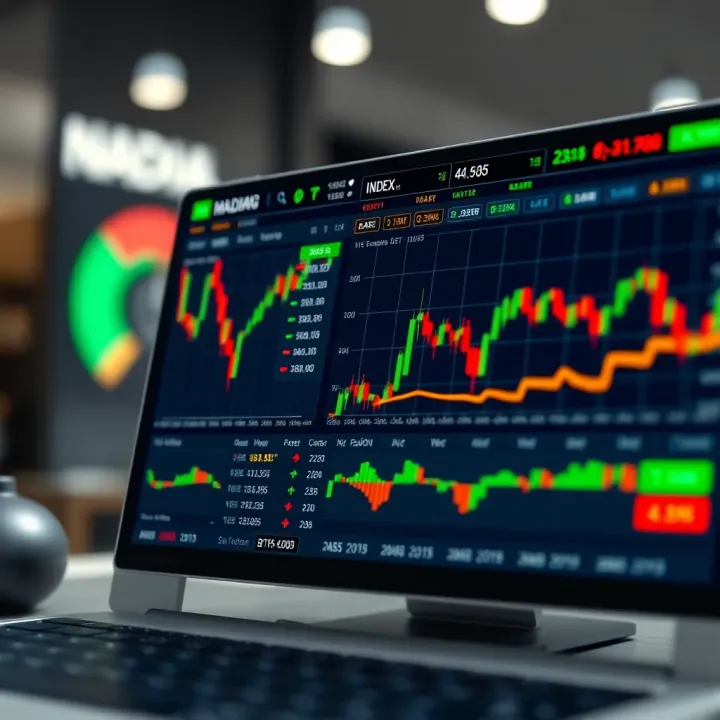
The FTSE 100 Index covers the 100 largest companies listed on the London Stock Exchange by market value. Its relevance to Nigerian investors lies partly in historical trading ties between Nigeria and the UK and partly because many FTSE-listed firms operate in sectors crucial to Nigeria, such as banking, oil, and telecommunications.
Movements in the FTSE 100 can reflect investor sentiment in Europe, which is one of Nigeria's significant trade partners. For instance, a slump in the FTSE might coincide with European economic slowdowns that reduce demand for Nigerian exports, affecting the Nigerian Exchange (NGX) market indirectly.
The NGX All-Share Index represents the overall performance of listed companies on the Nigerian Exchange. It combines price movements and market capitalisation to give a broad view of market health. Nigerian investors use it as the primary gauge to assess whether the local market is bullish or bearish.
Because it covers all sectors, the NGX All-Share Index allows traders to see how general economic trends or government policies impact listed companies. For instance, during times of currency volatility or inflation spikes, the NGX All-Share usually reflects investor nervousness through price swings.
Apart from the broad All-Share, the NGX provides sector-specific indices covering banking, oil and gas, consumer goods, industrial goods, and more. These sectoral indices help investors focus on areas they understand best or see growth potential in.
For example, the NGX Banking Index highlights real-time sentiment around Nigeria’s financial sector, often responding to changes in CBN policies or banking regulations. Similarly, the Oil and Gas Index tracks companies linked to Nigeria’s energy sector, which is sensitive to global oil prices and local production issues.
Sectoral indices sharpen investment strategies by letting you zoom in on specific economic drivers, making your trades more targeted and informed.
Understanding both global and Nigerian indices empowers investors to make smarter moves, balancing local opportunities with how the wider world influences Nigeria’s markets.
Trading indices in Nigeria offers investors a practical way to gain exposure to broad market movements without buying individual stocks. It provides diversification and allows traders to benefit from overall economic trends, both locally and globally. But to succeed, understanding the platforms, brokers, and techniques available within Nigeria’s trading environment is crucial.
Local brokerage firms have become more accessible for Nigerians interested in indices trading. Many established brokers on the Nigerian Exchange Group (NGX) now offer indices-based products or related services. These firms provide Nigerians with straightforward ways to invest via platforms tailored to local currency and regulations. For example, First Bank Securities and Meristem Stockbrokers allow clients to trade NGX indices and sectoral baskets, blending convenience with local knowledge.
Using local brokers also means quicker fund transfers in and out of accounts, often through banks integrated with these platforms, plus easier adherence to Nigerian Securities and Exchange Commission (SEC) rules. Yet, the range of indices available might be limited to domestic markets.
International brokers fill that gap by providing access to global indices such as the S&P 500 or FTSE 100. Brokers like IG Markets, Saxo Bank, and Interactive Brokers allow Nigerians to trade indices through Contracts for Difference (CFDs) or exchange-traded funds (ETFs) on foreign exchanges. These platforms generally offer better liquidity and a wider selection but require attention to currency conversion, account funding methods, and international KYC (know-your-customer) standards.
Contracts for Difference (CFDs) give Nigerian traders a way to speculate on price movements of indices without owning the underlying assets. CFDs allow you to buy or sell contracts that mirror the index value, benefiting from price changes in either direction. This method is popular because it offers leverage, enabling traders to control larger positions with smaller capital. However, it demands careful risk management to avoid heavy losses due to volatility.
Index futures and options are standard derivatives contracts traded on international platforms, less common locally but becoming accessible through global brokers. Futures obligate the trader to buy or sell an index at a set price on a future date, making it suitable for hedging or speculative strategies. Options give the right, but not obligation, to trade an index at an agreed price before expiry. Both require deeper understanding and can offer sophisticated trading opportunities for experienced investors.
Exchange-Traded Funds (ETFs) are investment funds listed like stocks on exchanges that track specific indices. In Nigeria, ETFs like the NewGold or NGX30 ETF provide indirect access to local equity indices. For global indices, Nigerian investors can buy ETFs listed on foreign markets through international brokers. ETFs are less risky compared to CFDs or futures and serve well for long-term investors seeking broad market exposure with lower fees and simpler handling.
Choosing the right platform and trading method hinges on your investment goals, risk tolerance, and experience level. Whether you prefer the local familiarity of Nigerian brokers or the variety offered by international firms, understanding these options is key for practical, profitable index trading.
Trading indices is increasingly relevant in Nigeria as more investors look beyond individual stocks to balance risk and tap into wider market dynamics. Familiarising yourself with the available platforms and trading methods prepares you to navigate this expanding market with confidence.
Trading indices successfully demands a clear strategy tailored to how these markets move. Nigerian investors must blend technical know-how, understanding of economic forces, and solid risk management to navigate day-to-day ups and downs. Practical strategies help you identify entry points, manage risks, and optimise returns within the Nigerian context.
Trend lines help traders spot the direction of an index over time by connecting key highs or lows on price charts. For example, drawing an upward trend line on the NGX All-Share Index chart highlights when the market is in an uptrend. Traders watch for breaks in these lines since a break below an upward trend line might signal a bearish turn. Patterns like head and shoulders or double bottoms also serve as warning signs of possible trend reversals. This hands-on approach guides traders when to buy or sell, especially in markets where local economic or political news can rapidly shift investor sentiment.
Indicators such as the Relative Strength Index (RSI) and Moving Average Convergence Divergence (MACD) measure momentum and trend strength, which are crucial for timing trades. For instance, an RSI above 70 might suggest the FTSE 100 is overbought, signalling a possible pullback. Nigerian traders who combine these indicators with volume data can better assess if price moves are strong or weak. These tools provide a more objective view compared to guesswork on market moods, helping manage timing with less emotional bias.
Macroeconomic reports like inflation rates, GDP growth, and employment figures heavily influence indices. A surge in Nigeria’s inflation rate, for example, could shake the NGX All-Share Index as investors adjust for potential Central Bank of Nigeria (CBN) policy changes. Similarly, global indices react to US jobs data or the price of crude oil, which is vital for Nigeria’s economy. Nigerian investors who keep an eye on these reports understand when market moves are rooted in solid economic shifts rather than random noise.
Indices move on the combined performance of listed companies. When major firms on the NGX release strong quarterly earnings, the index often rises. Conversely, disappointing earnings from key sectors like banking or consumer goods can drag the index down. Following earnings trends across sectors helps predict which way the market might trend. This insight is valuable during earnings season, avoiding blind trades and focusing on sectors with growth potential.
A stop loss is a predetermined price at which a trader will exit to limit losses. If you buy into the NSE Banking Index at 2,000 points and set a stop loss at 1,900, your position closes automatically if the index dips to that level, protecting your capital from further decline. This practice prevents emotional decision-making during volatile trading days common in Nigerian markets, especially in the ember months or political seasons.
Deciding how much capital to allocate per trade is key to long-term survival. Nigerian investors usually risk no more than 2-3% of their portfolio on a single index trade. This means if your portfolio is ₦1,000,000, the most you'd risk on one trade might be ₦20,000 to ₦30,000. Position sizing considers both your capital and the distance between your entry and stop-loss points. Proper sizing ensures one bad trade won’t wipe you out, giving you the chance to recover and profit in future trades.
Successful index trading in Nigeria combines clear technical signals, awareness of economic conditions, and strict risk controls to protect capital and capture profit opportunities.
Effective strategies offer a roadmap through the noise and unpredictability of markets, helping Nigerian traders build confidence and consistent results.
Trading indices comes with notable risks that every Nigerian investor should understand clearly. Unlike individual stocks, indices represent a basket of shares, which can sometimes cushion losses yet also expose traders to broad market swings. Recognising these risks helps investors prepare well and avoid pitfalls that might drain capital quickly.
Market volatility refers to how sharply and unpredictably prices move within short periods. For index trading, volatility can spike due to economic reports, political events, or global shocks—such as sudden changes in crude oil prices, which heavily influence the Nigerian economy. For instance, when OPEC announcements cause crude to surge or dip, indices like the NGX Oil and Gas Index can react violently.
Such price swings affect trader sentiment. In periods of high volatility, indices may experience big gaps up or down, increasing potential profits but also risk of large losses. Volatility is often heightened during ember months or ahead of elections, when uncertainty runs high.
To prepare for sudden market swings, traders should use risk management tools such as stop losses and position sizing to limit exposure. Diversifying across indices or combining index trading with other assets can smooth out gains and losses. Keeping updated with economic calendars—like CBN policy rates or inflation data—also aids anticipation of volatility spikes.
Sudden market changes can erase gains within minutes. Always plan for volatility, not just during big news days but as a daily trading reality.
The Securities and Exchange Commission (SEC) Nigeria plays a vital role in overseeing index trading platforms and brokers. Its mandate ensures fair trading, protects investors from fraudulent schemes, and enforces disclosure rules. For Nigerian traders, SEC regulations promote transparency and give confidence to participate in capital markets more boldly.
For example, SEC requires brokerage firms offering index products to maintain adequate capital, submit regular audits, and safeguard client funds. These measures prevent risks like broker insolvency or fund mismanagement.
Compliance is equally critical for local brokers and traders. Brokers must obtain SEC licences before offering index trading services and adhere strictly to market conduct rules. Traders should verify their broker’s registration status with SEC Nigeria to avoid scams. Additionally, brokers often implement Know Your Customer (KYC) and Anti-Money Laundering (AML) procedures, which traders must comply with to maintain smooth trading access.
Ensuring compliance helps keep Nigeria's financial markets healthy and secure, shielding investors from harsh shocks resulting from irregular practices.
Navigating risks and understanding Nigeria’s regulatory scene equip you to trade indices with greater confidence and discipline. Always combine technical knowledge with practical risk controls to make the most of opportunities this market offers.
Effective trading in indices demands reliable tools and resources to help traders make informed decisions. For Nigerian investors, these supports offer practical benefits — from spotting market trends to managing risks amid the inherent volatility of the market. Having access to quality analytical software, and up-to-date market news, alongside solid educational materials, can sharply improve trading outcomes.
Several platforms have become popular among Nigerian traders for tracking indices performance and executing trades. Notable examples include MetaTrader 4 and 5, widely used for their ease of access to various global and local markets, including CFD-based index trading. Another favourite is TradingView, which provides intuitive charts and social trading features, allowing traders to tap into community-shared analysis. Local platforms such as Meristem Securities also offer tools tailored to Nigerian equities and indices.
When choosing analytical software, look out for features that offer real-time data feeds, user-friendly interfaces, and the ability to customise indicators. Access to advanced charting tools like moving averages, RSI (Relative Strength Index), and MACD (Moving Average Convergence Divergence) can help detect trends and entry points. Importantly, platform reliability during volatile sessions is a must to avoid slippage and delays.
Reliable market updates are critical for Nigerian traders dealing with indices. News portals such as Bloomberg Nigeria, BusinessDay, and Nairametrics provide regular coverage on market movements, economic data releases, and geopolitical events that influence index behaviour. Staying linked to these sources ensures traders react to developments promptly.
Training and courses are becoming widely available in Nigeria, helping investors sharpen their skills. Organisations like the Chartered Institute of Stockbrokers (CIS) and online platforms offering tailored programmes on index trading give practical insights. Workshops and webinars often focus on technical analysis, trading psychology, and risk management relevant to Nigerian markets, helping traders build confidence and discipline.
Having the right tools and decent market intelligence is not just helpful but necessary for anyone serious about trading indices in Nigeria. These resources bridge the gap between guesswork and educated strategies, ultimately improving your chances at success.
In summary, Nigerian traders should prioritise access to robust analytical software paired with trustworthy news and continuous learning. This trio forms the backbone of effective, informed index trading in a market that moves fast and demands attentiveness.
🚀 Explore coin trading in Nigeria with tips on how to start safely, spot risks, use local platforms, and navigate regulations for better ₦ investments.
📱 Discover how copy trading apps work and the risks involved. Learn tips to invest safely and which apps suit Nigerian investors best in today’s market.
📈 Learn how surge trading helps Nigerian traders catch sharp market moves for quick ₦ gains. Discover strategies, tools, risks & local market tips to trade smart.
📊 Discover how Bitcoin prices change, what affects ₦crypto markets in Nigeria, top methods to predict BTC value, and tips on making smart investment decisions.
Based on 15 reviews