
Benefits of Forex Trading Explained
Discover forex trading benefits including financial opportunities, easy access, flexible trading hours, skill growth, and risk management strategies 📈💼💡
Edited By
Sophie Carrington
Forex trading has become a popular way for Nigerians to tap into global markets using their smartphones or laptops. However, stepping into the forex market without a solid understanding can lead to costly mistakes. This introduction aims to ground you in the basics, so you approach trading with confidence rather than guesswork.
The forex market deals with currency pairs, where one currency is exchanged against another. For example, the USD/NGN pair shows how many Nigerian Naira one US dollar can buy. Traders speculate on these price changes to make profits. Because forex runs 24 hours across different time zones, you can trade almost any time that suits your schedule.
Practical steps are key for Nigerian traders given local challenges like naira volatility, intermittent internet connectivity, and occasional power outages. Choosing the right broker — ideally one licensed by Nigerian authorities or reputable global bodies — helps protect your funds and ensures fair trading conditions.
Understanding key terms such as "pip" (the smallest price movement in a currency pair), "leverage" (the borrowed capital to increase trade size), and "spread" (the difference between buying and selling price) is vital. For example, using 50:1 leverage means you can trade ₦50,000 using only ₦1,000 of your own money, but this also amplifies risks.
Practical focus is crucial: rather than chasing quick wins, building a steady approach centred on sound analysis and risk management will increase your chance of success in Nigerian forex trading.
You should also familiarise yourself with local payment options for funding your trading account. Platforms like Flutterwave and Paystack integrate well with Nigerian banks and mobile money, making deposits and withdrawals smoother.
Before trading live, consider practising with a demo account offered by most platforms. This allows you to test strategies without risking real money.
Here’s a quick checklist to get started:
Understand currency pairs and how global events affect them
Learn important forex terminology
Choose a licensed, reliable broker with local payment support
Start with a demo account to gain experience
Develop a risk management plan to protect your capital
This introduction provides a foundation. The next sections will dive deeper into each aspect, helping you build practical skills tailored for the Nigerian trader.
Understanding the basics of forex trading is the first step for any Nigerian interested in the financial market. Forex, short for foreign exchange, deals with buying and selling currencies. Knowing how this market operates is essential because it helps you make informed decisions and avoid common pitfalls that many beginners face.
Forex trading involves exchanging one currency for another with the aim of making a profit from changes in their values. For instance, if you believe the US dollar (USD) will strengthen against the Nigerian naira (NGN), you buy USD/NGN at a lower price and sell it when the value rises. Unlike stocks or commodities, forex trading happens in pairs, meaning you always buy one currency while selling another.
The forex market is the world’s largest, handling daily transactions worth trillions of US dollars. It operates 24 hours a day across different time zones, allowing you to trade from Lagos in the morning and continue in New York or London as their markets open. Prices fluctuate due to economic news, geopolitical events, and market sentiment. For example, a sudden change in Nigeria’s oil prices or a Central Bank policy shift can move the NGN currency against others. This constant movement offers both opportunities and risks.
Some currency pairs are traded more frequently due to their liquidity and stability. These are called major pairs, such as USD/EUR, USD/JPY, and GBP/USD. For Nigerian traders, USD/NGN is a critical pair, heavily influenced by local economic factors such as foreign reserves and exchange policies. Understanding major pairs helps you focus on currencies with tighter spreads and better trading conditions. Besides majors, there are minor and exotic pairs involving emerging market currencies, but these tend to have higher volatility and less liquidity.
Learning the forex basics equips you with the confidence to navigate the market intelligently. By recognising the core terms and mechanics, you avoid jumping in blindly and can develop strategies tailored to your financial goals.
In summary, grasping what forex trading entails, how the market functions, and the role of major currency pairs sets a solid foundation. This knowledge enables you to approach forex with realistic expectations and avoid common traps especially relevant to Nigerian traders dealing with naira volatility and local regulations.
Getting familiar with certain fundamental terms is key before you start trading forex. These words shape every trade and decision, so knowing them helps you understand how the market moves and how your actions play out. Imagine trying to drive a car without knowing what the accelerator or brake do—that’s how trading feels without grasping the basics.
A pip is the smallest price change a currency pair can make and is crucial for measuring profits or losses. For example, if the USD/NGN pair moves from 460.00 to 460.10, that change of 0.10 is equal to 10 pips. Meanwhile, a lot is the size of your trade. One standard lot equals 100,000 units of the base currency, but many brokers offer mini or micro lots to make trading accessible without big capital.
Leverage allows you to control a large trade size with a smaller deposit—think of it as borrowing from your broker. For instance, with leverage of 1:100, ₦10,000 lets you trade ₦1,000,000 worth of currency. However, it works both ways; while leverage can boost gains, it can magnify losses too. In Nigerian context, where traders often start with modest funds, understanding leverage helps avoid blowing up accounts quickly.
The bid is the price your broker will pay to buy a currency pair from you, while the ask is what you’ll pay to buy it. The difference between these prices is called the spread, which is effectively the broker’s fee. Narrow spreads usually benefit traders because it means less cost for entering and exiting trades. For example, if USD/NGN bid is 460.00 and ask is 460.05, the spread is 5 pips.
Spreads can widen during volatile periods, like during Nigeria’s ember months or global economic shocks, increasing trading costs. That’s why picking a broker with competitive spreads is key for any Nigerian trader looking to maximise profits.
Orders instruct your trading platform how and when to enter or exit the market. The common types include:
Market Order: Executes immediately at current price. Use when you want to buy or sell without delay.
Limit Order: Sets a target price better than current price. It triggers only if the market reaches that level, helping you avoid overpaying.
Stop-Loss Order: Automatically closes a trade at a set loss level to protect your capital.
Take-Profit Order: Locks in gains by closing your position once it hits a favourable price.
Knowing when and how to use these orders is worth its weight in gold. For example, setting a stop-loss prevents a sudden market swing from wiping out your savings, which is especially important given the naira’s volatility.
Getting a grip on these essential terms equips you with the language and tools to trade confidently. Without them, you risk flying blind in forex markets that move fast and respond sharply to global and local news.
Understanding these basics gives you a solid foundation to build real trading skills, so you’re not caught off guard when markets shift.
Starting forex trading without a clear path can be like trying to navigate Lagos traffic without GPS—you’ll likely get stuck or lost. This section breaks down the essential steps Nigerian traders need to enter the forex market confidently and effectively. Understanding each step ensures you avoid common pitfalls and set a strong foundation for your trading journey.
A reliable broker plays a major role in your trading success. In Nigeria, with many brokers available — including some unregulated ones — your choice matters. Look for brokers registered with the Securities and Exchange Commission (SEC) Nigeria or those with international licences from recognised bodies such as the Financial Conduct Authority (FCA) or Cyprus Securities and Exchange Commission (CySEC).
Transparent fee structure (spreads, commissions)
Local payment options like bank transfers, USSD, or fintech wallets (e.g., OPay, Flutterwave)
Trading platform reliability
Customer service responsiveness
For example, brokers like FXTM and HotForex support Nigerian clients with local deposits and quick withdrawals, making them popular choices.
Once you select a trustworthy broker, the next step is registering your trading account. The process generally involves submitting your valid ID (like NIN or passport), proof of residence, and sometimes bank verification number (BVN). Verification can take 1-3 working days.
After activation, download the trading platform your broker supports, often MetaTrader 4 or MetaTrader 5. These platforms are user-friendly, offer advanced charting tools, and work on various devices—PC, tablet, or smartphone.
Setting up involves linking your account to the platform, adjusting preferences such as chart types, timeframes, and risk management tools. Knowing how to navigate these platforms before real trading will save you frustration later.
Before committing real naira, practising on a demo account is an absolute must. Demo accounts simulate real market conditions using virtual funds, allowing you to test strategies without risking money.
Use your demo to:
Understand how to place different order types
Practice reading market trends and charts
Build confidence with your trading platform
Note, the environment is close to the live market but sometimes misses emotional pressures that come with real money. Still, many Nigerian traders credit demo trading for sharpening their skills and reducing costly mistakes when they switch to live accounts.
Starting your forex trading journey step-by-step prevents wasted funds and frustration. Taking time with broker selection, account setup, and demo practice can make the difference between steady profits and heavy losses.
Knowing these steps and implementing them properly equips you to trade forex smarter in the Nigerian market.
Managing risks is a fundamental skill every Nigerian forex trader must master to preserve their trading capital. The forex market is highly volatile, and without proper risk control, a single trade can wipe out weeks or months of profits. Protecting your capital is not just about avoiding losses; it’s ensuring you stay in the game long enough to learn and grow your trading skills confidently.
Volatility measures how much currency prices swing within a short period. In Nigerian forex trading, volatility is affected by local factors like naira fluctuations, CBN policy changes, and international events such as oil price shifts that impact Nigeria’s economy. For example, during the 2022 naira depreciation crisis, traders saw unusually wide price swings. Knowing when the market is volatile helps you decide the appropriate trade size and timing, preventing impulsive decisions that can erode your capital.
Stop-loss and take-profit orders are essential tools to manage risk without constantly monitoring the market. A stop-loss order automatically closes your trade if the price moves against you to a set point, limiting losses. Conversely, take-profit locks in gains once a target price is reached. For instance, if you buy EUR/USD at 1.1000, you might set a stop-loss at 1.0950 to limit loss and a take-profit at 1.1100 to secure profit. Using these orders prevents emotional trading, helping you stick to your plan.
New traders often fall into avoidable pitfalls that harm their capital. One common mistake is overleveraging—Nigeria’s brokers may offer high leverage, but using ₦500,000 of leverage for a ₦10,000 capital can quickly lead to ruin. Another error is chasing losses by increasing stake size after failures instead of reviewing strategy. Also, neglecting to keep a trading journal to track wins and losses prevents learning from past mistakes. Avoid these traps by trading with caution, using risk limits, and reviewing your trades regularly.
Remember, successful forex trading in Nigeria demands discipline and a clear risk management plan. Protect your capital as you would a prized possession – it’s your foundation for consistent growth.
By understanding market volatility, setting clear stop-loss and take-profit points, and steering clear of common errors, Nigerian traders can significantly improve their chances of success in the often turbulent forex markets.
Navigating the forex market can be tricky, especially for Nigerian traders facing unique challenges like naira volatility and payment infrastructure issues. This section provides practical tips tailored to our context, helping traders not just to survive but to thrive. Understanding local nuances, staying informed, and committing to continuous learning are key to long-term success.
One practical step is to use local payment options like Paystack, Flutterwave, and OPay. These platforms simplify deposits and withdrawals, cutting down delays and high fees common with international transfers. For example, instead of relying on unstable forex bureaux, a trader could fund their broker account via Flutterwave’s seamless card payments or bank transfers, reducing hassle.
Besides payment methods, managing naira volatility is essential. Sudden exchange rate swings can eat into profits or inflate losses. Traders should monitor the Central Bank of Nigeria’s foreign exchange policies and consider trading in stable currency pairs or using brokers who offer naira-denominated accounts. Many Nigerian brokers now provide this feature, allowing traders to avoid frequent fluctuations and unexpected conversion costs.
Forex prices react to news globally and locally. Keeping tabs on events like CBN policy announcements, inflation reports, or elections helps you anticipate market moves. For example, a planned guber election in one state might impact the naira or relevant commodities, influencing forex pairs correlated with oil or foreign investment.
Use reliable sources such as financial newspapers, official releases from CBN, and economic bulletins. Beyond Nigerian news, monitor US Federal Reserve decisions and oil price trends since these heavily affect naira value. Awareness turns you from a passive trader to someone who can act smartly before markets swing.
Forex trading is a skill that improves with time and knowledge. Rely on trusted educational materials from reputed sources like the Nigerian Stock Exchange Trust Academy or trader groups recognised by SEC Nigeria. Avoid shortcuts or get-rich-quick schemes; instead, focus on mastering strategies such as technical analysis and risk management.
Regularly review your trades and learn from mistakes. Joining online communities with fellow Nigerian traders can provide insights into how others handle similar challenges. Also, attending webinars and workshops keeps you updated on best practices and emerging tools, such as new charting software or local regulatory changes.
Success in Nigerian forex trading depends heavily on adapting global strategies to local realities. Understanding payments, staying informed on economic events, and committing to continual learning creates a solid foundation for profitable trading.
Following these tips doesn't guarantee overnight success, but they build the resilience and knowledge base Nigerian traders need to compete and grow in the fast-moving forex market.
Discover forex trading benefits including financial opportunities, easy access, flexible trading hours, skill growth, and risk management strategies 📈💼💡
📉 Learn how margin and leverage work in forex trading, understand margin calls, and get smart tips to manage your risks effectively in the FX market.
📉 Understand deviation in Nigerian forex trading, learn why it happens, how to manage risks, and boost your trading decisions effectively.
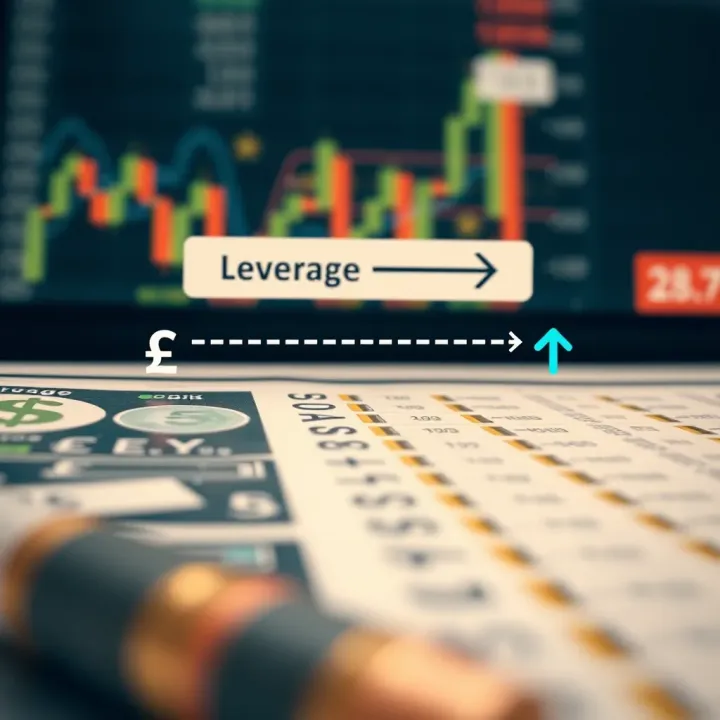
📊 Learn how margin shapes your forex trades, its risks, and margin calls. Get practical tips tailored for Nigerian traders managing forex margins wisely.
Based on 15 reviews