
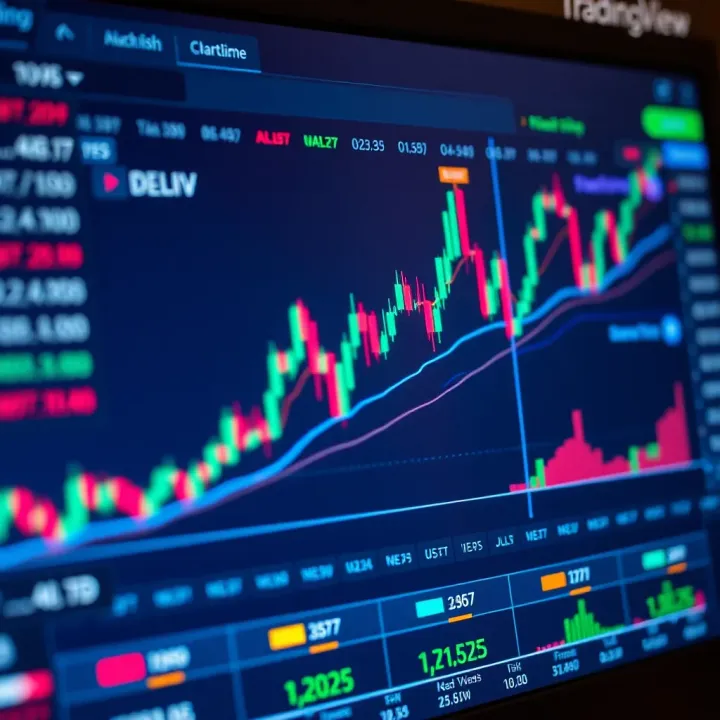
Using TradingView with Deriv for Better Trades
Boost your trading in Nigeria 🇳🇬 by linking TradingView charts with Deriv. Learn setup tips, features, and strategies for smarter market decisions 📈💡.
Edited By
Oliver Hughes
Integrating Deriv platforms with TradingView offers traders a powerful combo for market analysis, especially for those active in Nigeria’s fast-evolving financial space. With Deriv’s accessible trading interface and TradingView’s sophisticated charting tools, users can make sharper, data-driven decisions that respond quickly to market movements.
This integration lets you set up real-time data feeds, customise charts with unique indicators, and code trading strategies directly within TradingView. For example, Nigerian forex traders can track the USD/NGN exchange alongside commodities like crude oil and gold—all updated live. This reduces guesswork and helps spot trends early.

Getting started requires linking your Deriv account with TradingView via available APIs. Once connected, you can pull data streams into TradingView’s interface, merging Deriv’s trade execution ease with the advanced analytics it provides. The process includes:
Registering for API access on Deriv
Configuring API keys securely
Importing data feeds into TradingView
Building or applying custom indicators relevant to your trading style
The seamless flow of information ensures no delay between analysis and action, a key advantage in Nigeria’s volatile market. Custom coding lets traders build tailored alerts for price swings or volume spikes, which can notify you by email or on your phone.
Nigerian traders should consider local market dynamics such as naira volatility, fuel subsidy debates impacting oil prices, and global events affecting currency pairs. These factors make fast, adaptable analysis crucial.
By mastering this integration, investors, forex brokers, and financial analysts can enhance their market reads, reduce reliance on fragmented tools, and ultimately improve trade outcomes. The next sections will explain detailed steps on setup and practical examples relevant to our local environment.
Understanding how Deriv integrates with TradingView is essential for traders wanting to elevate their market analysis. The combination of Deriv's trading platform with TradingView's rich charting and scripting capabilities offers a powerful toolkit for spotting price patterns, executing strategies, and managing trades efficiently. This integration ensures you get real-time data updates and the flexibility to apply customised indicators, making informed decisions in dynamic markets like forex, commodities, and synthetic indices.
Key Features of Deriv: Deriv is a user-friendly platform offering access to derivatives trading across various assets. It provides features such as low minimum deposits, multiple account types with risk management options, and an intuitive interface geared toward both beginners and experienced traders. For instance, the platform’s demo account lets Nigerian traders practise strategies without financial risk, which is vital for sharpening skills in volatile markets.
Market Instruments Available: Deriv offers a wide range of instruments including forex pairs, commodities like gold and oil, synthetic indices which simulate market movements 24/7, and stock indices. This variety means traders in Nigeria can diversify their portfolios within a single platform, reducing the need to jump between different providers. Synthetic indices are especially popular here due to their continuous availability, sidestepping the closures common in traditional exchanges.
Trading Tools and APIs: Deriv supports traders with APIs that enable automated trading and seamless connectivity with external tools. Through its API, programmers can fetch real-time market data and place trades directly, improving execution speed. Nigerian developers can harness this functionality to build custom bots or link trading signals from other systems, a practical advantage for active traders facing the unpredictable naira exchange rate and local network constraints.
Charting Capabilities: TradingView provides comprehensive charts with multiple time frames and chart types—candlestick, line, bar charts—that suit various trading styles. Its smooth interface allows zooming and annotation, which helps traders visually confirm trends or reversals. For example, a forex trader analysing USD/NGN can use TradingView’s interactive charts to detect key support and resistance levels efficiently.
Custom Indicators and Scripts: One of TradingView’s strengths is the Pine Script language, which lets traders create and share tailored indicators and automated strategies. Traders in Nigeria can write scripts to match local market behaviours or develop alert systems based on specific price triggers. This customisation bridges the gap between generic tools and the nuanced insights needed for real-time decision-making.
Community and Shared Strategies: Beyond individual analysis, TradingView hosts a vibrant community where traders share ideas, scripts, and strategies openly. Nigerian traders and analysts can learn from global peers or contribute their own insights, fostering continuous improvement. Community-shared scripts sometimes provide innovative approaches that adapt well to Nigerian market peculiarities, such as high volatility during ember months or periods of geopolitical uncertainty.
The integration of Deriv with TradingView equips Nigerian traders with practical, adaptive tools necessary to navigate local and international markets effectively, combining the strengths of reliable data feeds and advanced visual analytics.
Together, these platforms create an environment where strategy meets execution—helping you trade smarter and faster.
Integrating Deriv with TradingView is the backbone of effective market analysis. Without setting up this connection properly, traders miss out on real-time data flow and seamless charting interactions that sharpen decision-making. This step enables you to blend Deriv’s diverse market instruments with TradingView’s advanced charting and analysis tools, creating a powerful platform to monitor and act swiftly in volatile markets like forex, commodities, and synthetic indices.
To begin, you need to create a Deriv account if you haven't done so already. This is straightforward — just sign up on Deriv’s official site with your valid email and necessary details. Once registered, navigate to the API section to generate your API credentials, usually a combination of an App ID and an API token. These credentials act as your digital key, allowing your TradingView interface to access live Deriv data securely.

Securing these credentials is essential, especially since they dictate what data and functions your integration can handle. For example, your API token permissions determine if you can only view market data or if you can also automate trades based on alerts generated via TradingView.
Understanding API limits is crucial next. Deriv places certain restrictions on the number of requests per minute or per day to prevent abuse and ensure server stability for all users. Being aware of these limits helps you design your data requests efficiently, avoiding sudden cut-offs during critical trading moments. For instance, if you plan to monitor multiple instruments simultaneously, you need to space out requests or prioritise key assets to stay within these thresholds.
Embedding the TradingView charting library into your Deriv environment transforms static data into dynamic charts users engage with. The TradingView widget can be placed in web apps or dashboards, displaying real-time price movements and offering interactive features like zoom, timeframes, and various chart types. This embedding directly increases how traders perceive and interact with Deriv markets, making technical analysis more accessible.
Configuring widget settings for Deriv markets lets you tailor the charts to reflect specifics like trading hours, instrument symbols, and price formatting. For example, you might set a widget to show forex pairs like USD/NGN with real-time price ticks and custom indicators tuned to Deriv’s price feeds. These adjustments ensure a smooth trader experience, avoiding confusion that arises if symbols are mismatched or timings are off.
Setting up the connection properly reduces lags between data reception and display, cutting out delays that could cost you profitable trades. It’s not just technical but strategic — integrating correctly means you get the right data at the right time.
By handling API access thoughtfully and configuring TradingView widgets to sync accurately with Deriv, traders and developers create a robust foundation for advanced market analysis tailored to Nigerian trading realities and beyond.
Creating custom indicators and strategies is essential for traders aiming to enhance their market analysis on Deriv with TradingView. This approach allows users to tailor tools that fit their unique trading style and market conditions rather than relying solely on off-the-shelf indicators. For instance, a forex trader focusing on the Nigerian Naira pairs may develop specific signals that react better to local market volatility, capturing entry and exit points more effectively.
Basic Syntax and Structure: Pine Script is a simple, purpose-built language designed for writing technical indicators and trading strategies on TradingView. It follows a straightforward syntax that resembles other programming languages but is optimised for financial data. Understanding variables, functions, and how to plot data on charts is fundamental. For example, you start by defining your inputs—such as the length of a moving average—then use mathematical operations to compute indicator values.
Example: Implementing a Moving Average Crossover: A classic application of Pine Script involves coding a moving average crossover strategy. This method uses two moving averages—typically a short and a long period—to generate buy or sell signals when they cross. For example, when the 10-period moving average crosses above the 30-period moving average, it signals a potential buy. This simple logic can be extended or refined to suit specific asset behaviour observed on Deriv markets.
Debugging and Testing Strategies: Once coded, testing your strategy is vital before live use. Pine Script provides tools that allow step-by-step debugging and backtesting using historical data. You can spot issues like incorrect signal detection or misaligned plotting early. For instance, if your crossover signals appear too late or too frequently, adjusting your script and rerunning tests ensures you only trade on reliable indicators.
Fetching Real-Time Prices via API: Integrating Deriv's API feeds real-time price data directly into TradingView indicators or strategies, enabling accurate, timely decisions. Nigerian traders benefit significantly here, as delays in price updates can cost precious opportunities. By programmatically pulling live market prices, your custom indicators react instantly to market shifts, helping you keep pace with fast-moving forex or commodities.
Synchronising Data with TradingView Indicators: To ensure your custom indicators reflect the latest market situations accurately, synchronising incoming Deriv API data with TradingView's internal chart data is necessary. This process involves mapping API data streams to the indicator's calculations without lag, avoiding conflicting signals. For example, if there’s a delay between the API data and the chart updates, you might get misleading alerts. Proper synchronisation maintains the integrity of your strategy and supports confident trading.
Developing customised tools turns inert data into actionable insights, especially when combined with real-time feeds from Deriv integrated into TradingView. This synergy lets Nigerian traders fine-tune their strategies to the pulse of local and global markets.
By harnessing Pine Script’s flexibility and Deriv’s live data, you gain an edge that goes beyond standard charts and indicators. This hands-on approach empowers you to tailor your market analysis for the complex, fluctuating conditions Nigerian traders face daily.
Optimising your trading workflow and data management is key to making the most of the Deriv and TradingView integration. Traders often juggle multiple tools, data feeds, and strategies, so streamlining these elements reduces errors and improves decision speed. By managing data effectively and automating key processes, you can respond faster to market movements and avoid costly lags or missed opportunities.
Data latency can seriously affect your trades, particularly in volatile markets like forex or commodities. Even a delay of a few seconds can mean entering a trade at an unfavourable price. Using TradingView’s real-time charting combined with the Deriv API’s streaming capabilities helps reduce these delays. For example, traders can set up WebSocket connections to get continuous price updates without the lag common with regular HTTP requests. This ensures your charts and strategies reflect the most current market data.
No system is perfect—API downtime happens, whether from maintenance or network issues. Having fallback options is vital. If the Deriv API temporarily fails, your setup can switch to an alternative data source, or freeze the last known prices temporarily to avoid executing trades on stale data. Using TradingView’s built-in data services as a backup, even if limited, is a practical approach. This reduces the risk of costly errors when live data flow is interrupted.
One strength of TradingView is its alert system which informs traders when set conditions occur—like a moving average crossover or price hitting support. Setting up alerts reduces the need to constantly watch the screen, which is helpful especially in Nigeria where internet connectivity can be patchy. Alerts can arrive via email, SMS, or even push notifications on your phone, ensuring you never miss a key market signal.
The next step after getting alerts is to automate your trade execution using Deriv’s API. For example, when TradingView triggers a buy alert, a script can send an order directly to Deriv without manual input. This reduces delays and emotional interference in your trades. Smart automation also lets you manage risks better, by quickly closing positions when stop-loss levels are hit. Combining alerts with automated execution turns your analysis into action swiftly and systematically.
Managing your trading data flow and automating alerts cuts down on stress, saves time, and sharpens your edge in fast markets. Nigerian traders should pay close attention to managing connectivity and system reliability to fully benefit from Deriv and TradingView integration.
The success of integrating Deriv TradingView for market analysis depends heavily on understanding local practicalities that Nigerian traders and developers face. Considering factors like internet connectivity, data costs, and legal frameworks ensures smoother, more reliable trading experiences. This section focuses on key issues that traders in Nigeria must address to use Deriv and TradingView effectively.
Reliable internet service is the backbone of any real-time trading setup. In Nigeria, inconsistent network coverage can disrupt the flow of live price data from Deriv to TradingView charts, leading to delayed signals and missed trading opportunities. For instance, a trader in a Lagos suburb may experience frequent network fluctuations during the ember months, impacting their ability to execute timely trades. Such delays can cause losses, especially in volatile forex or commodities markets.
Traders should therefore prioritise stable connections, perhaps using fibre broadband where available, or combining 4G with backup data from a different network provider. Mobile data hotspots are common, but they often come with signal drops that significantly harm real-time data feeds.
Streaming live market data and using charting tools consumes substantial data, which translates to higher costs for Nigerian traders. Given that data bundles can be expensive relative to average income levels, efficient data management is essential. Traders can minimise data use by reducing chart refresh rates or limiting simultaneous open charts on TradingView.
Besides, turning off unnecessary alerts or configuring the platform to notify only critical signals helps reduce constant data pull. Developers can optimise indicators and API calls to demand less bandwidth, which can be the difference between affordable trading and running into data exhaustion mid-session.
Traders and developers must operate within Nigeria’s financial legal framework to avoid penalties. Bringing Deriv platform trading activities into compliance means understanding that not all derivatives or forex trading are universally permitted. The Nigerian Securities and Exchange Commission (SEC) regulates capital markets and certain derivatives, while forex trading is also subject to Central Bank of Nigeria (CBN) policies. Using approved platforms and following Know Your Customer (KYC) rules safeguards traders from regulatory pitfalls.
Ignoring these can lead to account freezes or legal actions. For example, some derivatives contracts might be seen as speculative gambling, which is restricted under Nigerian law. Being aware of these distinctions before programming automated trades or deploying strategies helps prevent costly legal troubles.
The CBN and SEC regularly issue updates affecting trading conditions, currency controls, and capital market ops. Nigerian traders must follow these closely, as sudden policy changes around capital import/export, forex availability, or platform authorization can directly impact the use of Deriv and TradingView tools.
Developers building integrations should ensure their applications adapt quickly to new compliance requirements. For example, CBN’s recent tightening of forex restrictions means that converting profits from trading abroad might require additional documentation or approvals. Staying informed prevents service interruptions and supports long-term operational success.
Staying alert about internet quality and regulatory changes isn’t just good practice—it’s vital for anyone serious about market trading in Nigeria.
Understanding these practical considerations helps Nigerian traders and developers make better decisions, manage costs, and avoid legal risks while using Deriv and TradingView for effective market analysis.
Boost your trading in Nigeria 🇳🇬 by linking TradingView charts with Deriv. Learn setup tips, features, and strategies for smarter market decisions 📈💡.
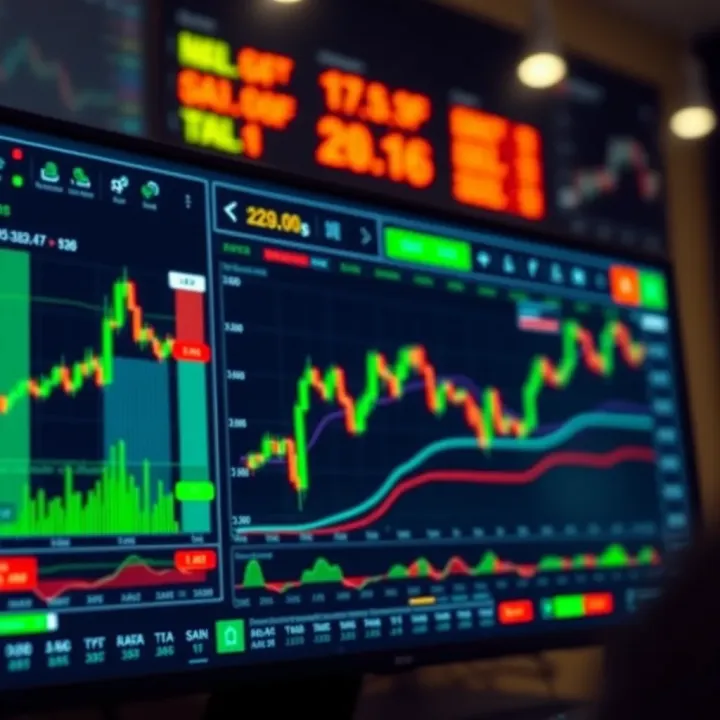
📈 Explore how combining TradingView with Deriv boosts your trading strategy in Nigeria. Learn setup tips and tricks for smarter trades today!

Explore TradingView’s tools and features 📈 to analyze stocks, forex, and crypto in Nigeria 🇳🇬. Learn account options and social features for better trading.

Explore how Nigerian traders combine TradingView and Deriv tools for smarter forex and market trading 📈. Learn charting, analysis & tips for better decisions.
Based on 5 reviews