
Using Finviz to Analyze Forex Markets Effectively
Explore how Finviz aids you in forex market analysis 📊 with key features, pros, cons, and practical tips to boost your trading decisions for success 💹.
Edited By
Benjamin Scott
The Finviz Forex Currency Strength Meter is a handy tool used by traders and investors to gauge the relative strength or weakness of major currencies in the forex market. For Nigerian investors navigating the complexities of forex trading, understanding currency strength helps in making better-informed decisions on when to buy or sell currency pairs.
This meter measures and compares the performance of individual currencies against a basket of others, allowing you to see which ones are gaining momentum and which ones are losing ground. Unlike relying solely on price charts or news, this tool gives a clear visual snapshot of currency trends, simplifying complex market data.
Typically, the Finviz Currency Strength Meter pulls data from multiple currency pairs and applies an algorithm to assign each currency a score, usually on a scale from weak to strong. For example, if the US dollar (USD) shows a high strength score while the Euro (EUR) appears weak, it suggests USD is outperforming EUR. A Nigerian forex trader might then decide to focus on trading USD/EUR pairs in that period.
Beyond just spotting strong versus weak currencies, using this meter complements other strategies like technical analysis or economic news evaluation. It helps reduce guesswork by quantifying movements that might be missed when you watch charts alone. Plus, it's especially valuable during volatile periods in Nigeria’s forex scene—such as times of naira fluctuations influenced by CBN policies or global economic events.
A Nigerian trader using the Finviz meter can quickly gauge when to enter or exit a trade by observing currency momentum, rather than reacting to fragmented signals from various pairs.
Instant visual cues of currency trends.
Supporting better timing in forex transactions.
Reducing emotional trading by relying on data-driven insights.
While many tools exist for assessing currency strength, Finviz’s meter stands out for its user-friendly interface and real-time updates. However, Nigerian traders should use it alongside local market considerations like naira forex restrictions and trading hours for best results.
In the following sections, we will explore how the Finviz Currency Strength Meter works in detail, its practical applications, and how Nigerian investors can gain an edge with it.
A currency strength meter is a tool that helps traders quickly gauge the relative power of various currencies at a glance. The Finviz Forex Currency Strength Meter shows which currencies are currently strong or weak based on price movements, making it easier to identify trading opportunities. For example, if the US dollar is strong while the euro is weak, a trader might consider going long on USD/EUR. This kind of real-time insight can save traders from hours of manual analysis.
Currency strength meters calculate how strong or weak individual currencies are against others in the forex market. Their purpose is to summarise complex price movements into simple strength scores or indicators. By monitoring these scores, traders can spot trends, potential reversals, or divergences. For instance, a Nigerian investor tracking the naira’s strength against the dollar can use a meter to know if the naira is gaining ground, impacting remittances or import costs.
These tools compare exchange rates across multiple currency pairs to derive a relative strength value for each currency. The calculation often involves averaging price changes weighted by volume or volatility. The key is to view currencies not in isolation but as a group where gains in one are losses in another. This approach helps traders understand broader market sentiment rather than isolated pair movements, which might be misleading.
Finviz offers its currency strength readings via a clean, user-friendly interface. It uses colour-coded bars or charts where green usually indicates strength and red shows weakness. This immediate visual feedback makes it simple for traders to pick out which currencies are outperforming others. The interface often allows quick toggling between timeframes, giving a clearer picture whether the currency is gaining strength in the short or long term.
Finviz typically covers major global currencies such as the US dollar (USD), euro (EUR), British pound (GBP), Japanese yen (JPY), and Canadian dollar (CAD). It may also include a few minor currencies depending on data availability. Though the Nigerian naira (NGN) is less likely featured directly due to its relatively lower global forex volume, traders can still combine Finviz insights with local market knowledge to make informed decisions.
The Finviz Forex Currency Strength Meter transforms complex forex data into an accessible snapshot of currency trends, making it a practical tool for both seasoned traders and newcomers navigating volatile markets.
This section lays the groundwork for understanding how currency strength meters operate and why Finviz's presentation stands out, especially for traders looking for quick, reliable forex signals.
Understanding how the Finviz Currency Strength Meter works is vital for traders seeking to navigate the dynamic forex market. This section breaks down the data sources and algorithms that power the meter, as well as the meaning behind the strength scores it provides. The clarity enables smarter decision-making, especially when discerning the relative power of currencies amid volatile market events.
The Finviz meter draws primarily from real-time forex price data, capturing the movements of currency pairs across global exchanges. It reads these price changes in pairs, such as USD/EUR, USD/JPY, and Nigerian naira pairs where available, then aggregates the information to gauge each currency’s relative strength. The use of widespread price data ensures the meter reflects actual market sentiment rather than relying on outdated or isolated figures.
In practice, this means when the euro steadily rises against most currencies, the meter reflects that strength, helping traders spot trends that might not be obvious just from single-pair charts. For Nigerian traders, it can offer insight into how the naira fares alongside major currencies like the dollar or pound. The inclusion of established currency indices, such as the US Dollar Index (DXY), adds depth to the meter’s foundation by weighing major currencies’ influences.
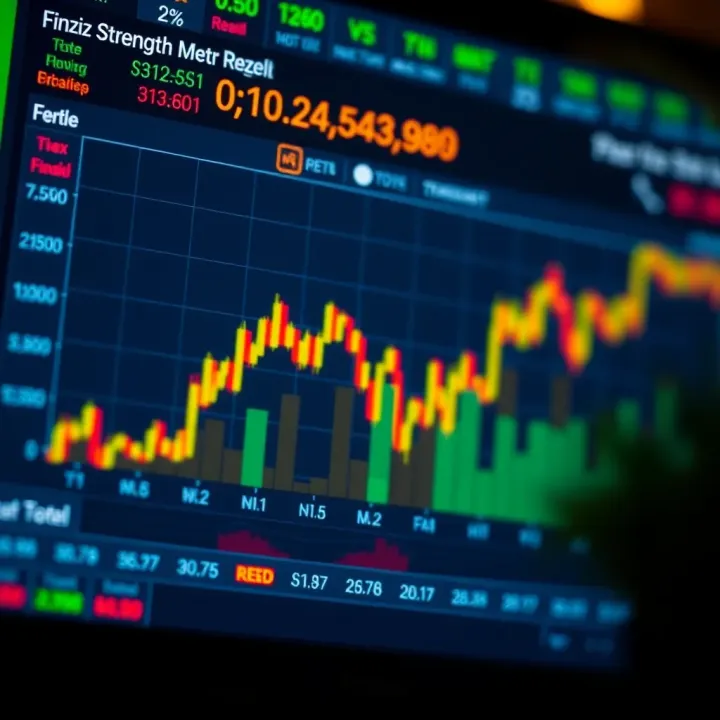
At the core, Finviz applies algorithms that convert raw price data into a normalised score representing currency strength. These calculations typically involve comparing each currency's performance against a basket of others and averaging the relative changes. The algorithm filters noise from brief price spikes or drops, offering a smoother, more reliable indication of enduring trends.
This mathematical approach allows the meter to score currencies on a unified scale, making it straightforward to compare, say, the British pound's momentum versus the Japanese yen. For traders, it removes much of the guesswork, supplying a quick snapshot of currency health backed by quantitative data, which can be especially useful during turbulent sessions caused by economic announcements or geopolitical events.
The Finviz Currency Strength Meter scores currencies on a scale generally ranging from 0 to 100, where higher values indicate stronger currencies. This scaling helps standardise diverse forex data into a simple, comparable format. A currency with a strength score of 80 would be considered robust against others, while one around 20 suggests weakness.
Since these scores are relative, traders should watch for shifts over short and medium terms. For instance, if the Nigerian naira’s strength moves from 30 to 50 while others stay relatively flat, it signals improving naira demand, potentially opening opportunities for trades involving the naira.
To identify strong or weak currencies, focus on the extremes of the strength scale. Currencies with consistently high scores are likely candidates for buying, whereas low scores suggest selling or avoidance. For example, if the US dollar scores 75 and the euro is at 35, it signals the dollar's dominance in current market conditions.
Traders can combine these insights with their own technical analysis or news events for better timing. For Nigerians, understanding if the naira is gaining or losing strength relative to the dollar or euro helps in managing risks linked to import costs, remittances, or investments.
Consistently monitoring how these strength scores evolve can improve trade timing, especially during volatile times like ember months when markets react sharply to global and local news.
In summary, the Finviz Currency Strength Meter works by transforming live forex price data through algorithms into clear scores that reveal currency power. By interpreting these scores correctly, traders can sharpen their strategies and recognise market moves more confidently.
The Finviz Currency Strength Meter helps traders spot which currencies are performing well against others at a glance. By comparing the strengths across multiple currencies, you can quickly identify pairs that show the widest gap in power. For example, if the US dollar clocks in at a strong reading while the euro is weak, the USD/EUR pair becomes attractive for a potential buy position on the dollar. This insight saves time that would otherwise be spent analysing multiple charts separately.
This tool is especially useful in volatile markets where currency strength can shift rapidly. Nigerian forex traders, for instance, can monitor the naira's performance against major pairs and decide if the moment is right for a trade or if caution is needed due to naira instability.
Beyond spotting opportunities, the meter aids in deciding when to enter or exit trades. Strength readings move with market trends, signalling early shifts. Seeing a currency strengthening after a period of weakness can suggest a good entry point. Conversely, a noticeable drop in strength may warn of exit time before losing value.
For instance, a trader following the GBP/USD pair might wait until the strength meter shows a clear uptrend in the pound before buying. Later, if the pound's strength rating dips, the trader can exit to protect profits or limit losses. This dynamic use of the meter complements traditional chart patterns.
The Finviz Currency Strength Meter is best used with other trading tools for a fuller picture. Technical indicators like Moving Averages, RSI (Relative Strength Index), or Bollinger Bands provide details on momentum and volatility. When the meter highlights a strong currency and technical indicators confirm oversold conditions, it strengthens the trade signal.
For example, Nigerian traders might see a strong naira on the meter alongside bullish crossover on a 50-day Moving Average, which adds confidence to the buying decision. This combination reduces reliance on a single data point and improves precision.
Accurate risk control is vital in forex trading. The strength meter helps traders avoid pairing two weak currencies, which often leads to unnecessary losses. By selecting pairs with a clear strength differential, you tilt the chance of success in your favour.
It also informs position sizing. If a currency shows volatile strength swings, a trader can reduce exposure or tighten stop-loss orders to protect capital. Nigerian traders juggling naira fluctuations can use the meter to adjust risk in real time, guarding against unexpected market turns.
Using the Finviz Currency Strength Meter alongside technical and risk management tools gives traders a practical edge, turning data into timely, well-informed trading decisions.
Forex traders in Nigeria face unique challenges and realities that affect how they use tools like the Finviz Currency Strength Meter. Understanding these realities helps optimise the tool's usefulness and mitigates potential misunderstandings caused by local market quirks.
The naira has experienced significant volatility in recent years, driven by factors such as fluctuating oil prices, foreign exchange restrictions, and varying monetary policies by the CBN. This instability affects the accuracy of currency strength readings involving the naira, since sudden policy shifts or unexpected events can cause sharp price movements that may not reflect underlying currency strength.
For example, a sudden naira devaluation announced by the Central Bank can lead to abrupt spikes or drops in the strength meter. Traders should therefore treat naira-related readings with caution, considering recent policy announcements and market conditions alongside the numerical scores provided by Finviz.
Beyond naira volatility, Nigeria’s economy features specific drivers that can distort currency strength interpretations. Factors such as government revenue from oil exports, import dependence, fuel subsidy changes, and central bank interventions heavily influence forex markets.
A surge in oil prices often supports the naira temporarily, but if fuel scarcity hits or political instability rises, traders might see abrupt weakness that’s more about market sentiment than fundamental currency strength. Staying updated on Nigeria’s economic reports, including GDP growth and inflation data, helps traders contextualise Finviz readings and avoid misleading conclusions.
Internet access quality affects use of online tools like Finviz in Nigeria. While Finviz is globally accessible, downtime or slow connections can hinder timely access, especially for traders outside major urban centres. Knowing alternatives such as Investing.com or TradingView’s currency strength tools provides backup options if Finviz is unreachable.
Also, since Finviz does not include the naira directly in its strength meter, Nigerian traders might combine its data with local sources such as the FMDQ Foreign Exchange market reports or CBN publications for a fuller picture.
Reliable data streaming depends on solid internet connectivity, which may falter during Nigeria’s frequent power outages or network throttling. This can delay updates from Finviz, making live forex decisions risky if based solely on delayed readings.
Traders should consider using data bundles from reliable providers or specialised forex data packages. Offline analysis combined with updated snapshots during peak connectivity hours also enhances decision-making, ensuring Finviz remains a practical tool despite infrastructural challenges.
For Nigerian traders, combining the Finviz currency strength meter with local economic awareness and alternative data sources sharpens trading strategy and reduces exposure to unanticipated swings linked to naira volatility and connectivity issues.
By recognising these practical considerations, traders can better navigate both the opportunities and limitations of Finviz’s meter in Nigeria’s dynamic forex market.
In the world of forex trading, evaluating different currency strength meters is key to making informed decisions. Each tool offers unique features, data sources, and interpretations, so comparing Finviz’s meter with alternatives helps traders pick the option that fits their style and market focus best. For Nigerian traders, this comparison is especially relevant because the Naira’s volatility and local economic factors demand a tool that balances reliability, accessibility, and relevance.
Several other currency strength meters have gained popularity among forex traders worldwide. Tools like the JForex currency strength index, the Forex Strength Meter by TradingView, and the Dynamic Currency Index by CurrencyHeat offer distinct takes on measuring currency power. For instance, the TradingView meter integrates multiple technical indicators and real-time charts, allowing more nuanced analysis within one platform.
The main difference lies in the data sources and visual presentation. While Finviz focuses on a clean, straightforward interface providing quick overviews, others might provide deeper technical data or broader currency coverage. However, some alternative meters require subscriptions or depend heavily on high-speed internet, which can be challenging for users in Nigeria where connectivity sometimes falters.
Finviz’s currency strength meter is praised for its user-friendly design and free accessibility. It gives clear, real-time strength readings without forcing traders to navigate complicated charts or pay hefty fees. This simplicity is a major advantage for busy traders or those new to currency strength analysis.
On the downside, Finviz's meter covers mainly the major and a few minor currencies, lacking detailed insight into emerging market currencies like the Nigerian Naira or other African currencies. Alternative tools sometimes offer broader currency sets and more advanced customization, though this comes at the cost of complexity or requiring paid subscriptions. In those cases, traders might face a trade-off between ease of use and detailed analytics.
When selecting a currency strength meter, consider factors like currency coverage, ease of use, data update frequency, and compatibility with your trading style. For example, if you trade major pairs frequently, Finviz provides enough detail and is straightforward. But if your strategy depends on technical analysis or involves less common currencies, you might explore more feature-rich tools.
Also, think about your access to stable internet and unfamiliar platforms. Tools with heavy data requirements may be less practical if your connection is unreliable or costs are high.
Nigerian traders must pay attention to how these tools handle the Naira and local market conditions. Many international tools don’t cover the Naira adequately or fail to adjust for its frequent exchange rate changes. Hence, some traders combine the Finviz meter with local market reports and updates from the Central Bank of Nigeria (CBN) to get a fuller picture.
Customising your use of these meters might also mean supplementing online tools with alerts from Nigerian forex platforms like OPay or Kuda, which sometimes provide live currency updates tailored for local users. This blend ensures traders stay aware of both global trends and local idiosyncrasies when deciding on trades.
Comparing tools isn’t about picking a perfect one but finding the best combination that suits your trading demands, technical comfort, and local market nuances.
Explore how Finviz aids you in forex market analysis 📊 with key features, pros, cons, and practical tips to boost your trading decisions for success 💹.
📈 Learn how to trade forex in Nigeria with practical steps, strategies, and tools. Manage risks and explore ways to grow your income from home safely. ₦
Looking for the best forex broker in Nigeria? Discover top tips on regulation ✅, fees 💰, platforms 📈, and support 🤝 tailored for Nigerian traders.
🇳🇬 Find your ideal forex broker in Nigeria by comparing regulation, platforms, fees, and support for safer, efficient trading tailored to your needs!
Based on 9 reviews