
TradingView Guide for Nigerian Traders
Explore TradingView’s features, charts 📊, and broker integrations for Nigerian traders. Boost your strategies with tools & local market insights!
Edited By
Clara Mitchell
Fibonacci retracement is one of the most widely used technical analysis tools among Nigerian traders dealing in equities, forex, and commodities. The tool helps identify potential support and resistance levels where market prices might pause or reverse. Rather than guessing, traders rely on Fibonacci retracement levels to guide their entry, exit, and stop-loss points with more confidence.
At its core, Fibonacci retracement uses horizontal lines to mark key percentages of a price move. These percentages—commonly 23.6%, 38.2%, 50%, 61.8%, and 78.6%—originate from the Fibonacci sequence, a mathematical pattern found in nature. In trading, these levels act as psychological barriers where supply and demand forces often react.
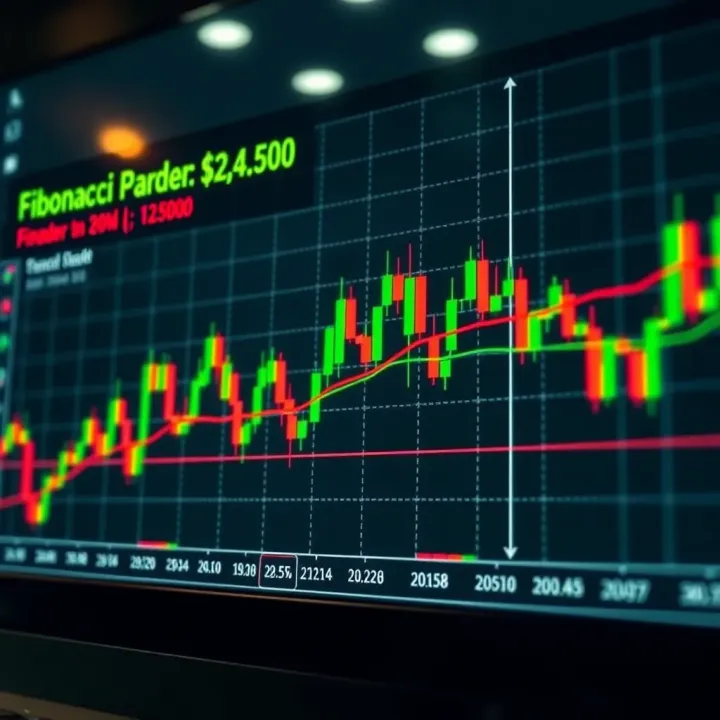
For example, imagine an equity on the Nigerian Stock Exchange (NGX) surges from ₦200 to ₦300 in a few days amid positive earnings reports. Traders then apply Fibonacci retracement by plotting the 61.8% level at about ₦238. If the price pulls back to this level, it may find support and bounce back. Nigerian traders often monitor such zones to decide whether to add to their positions or take profits.
Fibonacci retracement is not a prediction tool but a guide to where price corrections might end and trends resume. Combining it with other indicators or market context improves its reliability.
In the Nigerian forex market, where currencies like the US dollar and British pound fluctuate against the naira, these retracement levels help manage the volatile swings. For instance, a trader watching USD/NGN might apply retracement levels on a recent rally to identify where pullbacks could provide buying opportunities. This helps prevent panic selling or buying at overheated prices.
Overall, understanding Fibonacci retracement equips traders to spot key price areas effectively. Rather than relying on gut feel only, Nigerian investors can use this method alongside volume data, price action, and local economic news to craft smarter trading decisions.
Fibonacci retracement is a popular tool in trading that helps traders identify likely points where price movements could pause or reverse. This relevance stems from the natural mathematical relationships found in the Fibonacci sequence, which traders apply to price charts. For Nigerian traders, especially in equities listed on the Nigerian Exchange (NGX) and forex pairs involving the naira (₦), using these retracement levels can enhance decision-making by revealing potential support and resistance zones with practical accuracy.
The Fibonacci sequence starts with 0 and 1, and each next number is the sum of the two preceding ones: 0, 1, 1, 2, 3, 5, 8, 13, and so on. The key takeaway for trading is not the numbers themselves but the ratios derived from them. The most significant of these is the golden ratio, approximately 61.8%, which appears in natural phenomena and financial markets alike. This connection between nature and market behaviour intrigues traders as it offers a systematic way to gauge price retracements.
When applied to price charts, the ratio helps traders identify how far prices might pull back before resuming their direction. For example, after a strong upward move in a stock like MTN Nigeria, the price might retrace roughly 38.2% or 61.8% before bouncing back. This sequence thus forms the basis for plotting horizontal lines on charts, marking potential stopping points for retracements.
One core reason traders rely on Fibonacci retracement lies in spotting support and resistance areas. These are price levels where buying or selling pressure tends to strengthen, slowing down or reversing price movement. Imagine a trader watching the price of a blue-chip stock such as Dangote Cement; using Fibonacci levels, they can estimate where the stock price is likely to halt its decline and perhaps climb again. This allows more confident entry or exit choices, reducing guesswork.
Besides, Fibonacci tool aids in predicting possible price reversals. While not a guarantee, retracement levels act as clues about where a rally or slump may lose steam. In the Nigerian forex market, this is especially useful when trading pairs like USD/NGN, where sudden economic news or Central Bank policies can cause sharp moves. By combining Fibonacci retracement with other indicators such as moving averages or volume, traders get better odds of timing reversals, which directly impacts profitability.
Traders who use Fibonacci retracement effectively see it as a map highlighting likely price pauses, lending structure to what can otherwise appear as random market moves.
In sum, understanding Fibonacci retracement means equipping yourself with a tool that blends natural mathematical patterns and market psychology. For Nigerian market players, it serves as a cost-free, visual guide to plan trades with more certainty amid the usual market noise.
Understanding Fibonacci retracement's key levels is essential for traders because these points serve as potential support or resistance where price action may stall or reverse. Identifying these levels accurately on price charts helps traders make informed decisions when entering or exiting trades. In the Nigerian market, where volatility in equities and forex is common due to economic shifts and policy changes, recognising these retracement points can improve timing and risk management.
Fibonacci retracement levels like 23.6%, 38.2%, 50%, 61.8%, and 78.6% represent specific percentages where price may retrace after a significant move before continuing its original trend. The 38.2% and 61.8% levels are particularly watched because price often respects these boundaries. For example, if an NSE-listed stock rallies from ₦100 to ₦150 and then pulls back, traders might expect a bounce around the ₦130 level (38.2% retracement), signalling a possible buying opportunity.
Though the 50% level is not a Fibonacci number, it is widely used by traders as a psychological midpoint that often marks a temporary support or resistance. Applying these retracement levels helps traders anticipate where markets might stall rather than reacting only once momentum changes.
The golden ratio, approximately 61.8%, holds special significance in Fibonacci analysis. This figure emerges from the mathematical sequence where each number is about 61.8% of the next. Market price movements often reflect this ratio, making it a practical guide in spotting reversals or trend continuations.
In practical terms, if a forex pair involving the Nigerian naira, such as USD/NGN, rallies sharply and then retraces near the 61.8% level, this point becomes a critical area where traders look for confirmation of a renewed uptrend or breakdown. It’s why many Nigerian traders pay close attention to the golden ratio for making decisions.
On Nigerian Stock Exchange (now known as NGX) equities, traders apply Fibonacci retracement by first identifying a clear recent swing high and swing low. For instance, a popular stock like Dangote Cement might show a strong upward move followed by a pullback. Drawing Fibonacci levels from the low to the high helps the trader spot potential zones — such as 38.2% or 61.8% — where the price could find support and rise again. This approach suits both short-term traders sensing quick corrections and longer-term investors aiming to add to positions prudently.
In the forex market, pairs involving the naira (NGN), like EUR/NGN or GBP/NGN, experience frequent volatility due to Nigeria’s currency policy and fuel supply issues. Using Fibonacci retracement alongside charts on platforms like MT4 allows forex traders to predict retracements amid sudden moves. For example, if ₦ strengthens against the dollar, traders watch the retracement levels to decide when to take profits or add positions based on probable pullback areas.
Recognising how Fibonacci retracement levels work in both equities and forex markets empowers Nigerian traders to anticipate price behaviour more accurately, improving trade timing and risk control.
By understanding and applying these key levels, traders in Nigeria can avoid guesswork and enhance their strategies on local charts and currency pairs.
Fibonacci retracement is more than just drawing lines on a chart; it becomes practical when integrated into solid trading strategies. Nigerian traders benefit most when they blend Fibonacci levels with other indicators to confirm signals and refine entry and exit points. In markets like the Nigerian Exchange (NGX) and forex pairs involving the naira, relying solely on Fibonacci can lead to misleading signals because of market volatility and external factors such as policy changes and economic news.
Moving averages (MAs) smooth out price data and highlight trends clearly. When these averages line up with Fibonacci retracement levels, they provide stronger indications for traders. For instance, if a 50-day moving average converges with a 61.8% Fibonacci retracement level on a stock like Guaranty Trust Bank (GTBank), it often signals a robust support. Nigerian traders can watch for price reactions at this zone before deciding to buy or sell.
Similarly, if price breaks below such confluence areas, it might warn of a trend reversal. By combining moving averages with Fibonacci levels, traders reduce false signals that may arise from using either tool in isolation.
Volume provides insight into the strength behind price movements. When prices approach a Fibonacci level accompanied by increasing trade volume, it suggests that many participants back this level, enhancing its reliability.
For example, during an upward retracement in a forex pair like USD/NGN, if volume spikes near the 38.2% retracement, it could confirm buyers stepping in, potentially reversing the decline. Conversely, low volume at those levels may indicate weak interest, warning traders to be cautious.
Fibonacci levels act as potential buy zones, especially when prices pause or reverse close to levels like 50% or 61.8%. Assume a trader watches the share price of Dangote Cement pulling back after a strong rally. If the price stalls near the 50% retracement and shows bullish candlestick patterns, this becomes an attractive point to enter a long trade.
Such zones offer traders a chance to join a trend at a lower price with controlled risk, rather than chasing after extended moves. Nigerian traders should observe other indicators or market sentiment at these points for confirmation.
Stop-loss placement is vital for risk management. Traders often set stop-loss just below the next lower Fibonacci level to avoid exiting prematurely while controlling losses. For instance, if entry is near the 38.2% retracement, a stop-loss could be placed slightly below the 50% level.
Targets can be established at previous highs or the next Fibonacci extension levels beyond 100%, helping traders lock profits systematically. Nigerian market conditions, with occasional volatility spikes especially during ember months or political events, make these clear reference points crucial.
Using Fibonacci retracement as part of a wider strategy—combined with moving averages, volume, and clear risk management rules—gives Nigerian traders practical tools to navigate local markets more confidently.
Fibonacci retracement offers a simple visual approach to spotting key price levels, which many Nigerian traders find handy. The lines drawn at various Fibonacci levels—such as 38.2%, 50%, and 61.8%—highlight potential support and resistance zones clearly on price charts. This ease of identification helps investors quickly understand where price might pause or reverse without diving into complicated number crunching.
For example, a trader watching a stock on the Nigerian Stock Exchange (NGX) can apply Fibonacci retracement during a recent price rally to spot where a correction might end and buying interest could resume. This straightforward visual guidance works well even for newcomers trying to grasp market swings.
Fibonacci retracement proves useful across different market conditions, whether the price trend is strong or moving sideways. In trending markets, the retracement levels help traders identify ideal pullback zones to enter positions aligned with the trend. Conversely, during range-bound markets frequently seen in Nigerian equities or forex pairs like USD/NGN, Fibonacci lines assist in spotting reversal levels within the range.
Such flexibility means traders can rely on Fibonacci for both momentum-driven trading and for range plays, adapting strategies as the market shifts. For instance, a forex trader might combine Fibonacci retracement with support and resistance lines from previous price action to confirm range boundaries and make more confident trade decisions.
A major risk of relying solely on Fibonacci retracement is its potential to mislead if treated as a standalone indicator. Prices do not always respect Fibonacci levels rigidly—market sentiment, news events, and liquidity can override these zones unexpectedly. Nigerian traders who depend purely on Fibonacci signals may suffer losses during volatile sessions or ember months when market behaviour is less predictable.
To manage this, it’s crucial not to treat Fibonacci levels as holy grails but rather as one part of a broader toolkit. Confirmation through other methods is essential to reduce false signals.
Confirming Fibonacci retracement with other technical tools like moving averages, candlestick patterns, or volume analysis strengthens trading decisions. For example, seeing price approach the 61.8% Fibonacci retracement level with increasing trade volume and forming a bullish candlestick increases the likelihood of a genuine reversal. Similarly, combining Fibonacci with trend lines or oscillators like RSI adds multiple layers of evidence before entering or exiting trades.
Effective risk management in Nigerian markets involves combining Fibonacci retracement with other analysis techniques and paying attention to macroeconomic news such as CBN policy changes or NGX market updates. This approach helps traders filter noise and make decisions grounded in several indicators rather than one.
By understanding both the strengths and limitations of Fibonacci retracement, Nigerian traders can better use the tool to complement their analysis system and navigate markets more confidently.
Fibonacci retracement is a powerful tool, but Nigerian traders must apply it thoughtfully to get real value. Practical tips help you avoid common pitfalls while improving analysis across equities and forex markets. Knowing when and how to use the tool on your preferred platforms can make a big difference.
Short-term versus long-term analysis matters because price movements vary with duration. For short-term trades in forex pairs like USD/NGN, traders focus on 5-minute to hourly charts to spot quick pullbacks and entries. Longer-term investors watching blue-chip stocks on the Nigerian Exchange Group (NGX) may use daily or weekly charts to identify stronger trend retracements, helping to avoid noise and false signals common in shorter timeframes.
Picking the right timeframe also depends on your trading style. Day traders could find the 23.6% and 38.2% levels useful for quick moves, while position traders would watch deeper retracements like 50% to 61.8% for meaningful support in trending markets.
Adapting Fibonacci levels across chart periods is crucial because levels drawn on one timeframe won’t always fit another. For instance, a retracement zone on a 4-hour chart might be invisible or irrelevant on a 15-minute chart. Nigerian traders should cross-check Fibonacci levels across multiple timeframes to confirm key support or resistance. For example, if NGX banking stocks show a 61.8% retracement on daily charts, also check hourly charts to find entry points near those levels.
This multi-timeframe view prevents reliance on a single snapshot, which could mislead due to short-term volatility or anomalies.
Using FGX and MT4/MT5 popular in Nigeria is the next practical step. FGX (Fintech Global Exchange) and MetaTrader platforms like MT4 and MT5 are widely used by local traders for accessing equities and forex markets. These platforms come with built-in Fibonacci retracement tools that allow drawing levels quickly and testing different price points.
Being adept with these platforms helps Nigerian traders save time and customise analysis. For example, MT5 in Nigeria supports multiple asset classes and timeframes, letting you apply Fibonacci retracement seamlessly to NGN pairs or stocks.
Customising Fibonacci tools for local market conditions makes the retracement levels even more effective. Nigerian markets can behave differently from international ones, partly because of volatility, liquidity constraints, and regulatory factors. Adjusting colour schemes, level visibility, or combining Fibonacci with local indicators like NSE volume trends can enhance clarity.
For example, a trader might highlight the 61.8% level in bright red on MT4 to signal critical support in an NSE equity, then overlay with local volume spikes to confirm the signal.
Successful use of Fibonacci retracement depends not just on understanding levels, but on applying them with respect to your timeframe, trading style, and platform features tailored for Nigerian markets.
By choosing the right timeframe and optimising platforms like FGX or MT5 for your context, you increase your chances of identifying reliable support and resistance zones. This sharpens entry and exit timing, helping you navigate the Nigerian market’s unique conditions confidently.
Explore TradingView’s features, charts 📊, and broker integrations for Nigerian traders. Boost your strategies with tools & local market insights!
📈 Explore VIX 75 with our guide tailored for Nigerian traders. Learn how it works, trading tips, risk control, and price drivers to boost your portfolio.
📊 Learn how binary trade works in Nigeria! Discover key features, smart strategies, and platform tips to trade asset prices confidently and manage risks effectively.
📊 Explore Binary.com in detail! Learn its features, account types, and strategies tailored for Nigerian traders to trade confidently and securely.
Based on 11 reviews