

Binary Trading on TradingView: Guide for Nigerian Traders
📈 Master binary trading on TradingView with practical tips, chart analysis, and risk management designed for Nigerian traders navigating the digital market space.
Edited By
Emma Wright
Deriv binary trading is gaining serious traction among Nigerian traders, especially those who want to capitalise on short-term price movements of assets. Unlike traditional trading, binary options offer a straightforward proposition: predict whether an asset’s price will be above or below a certain level at a specific time. The reward is fixed — either a profitable payout or a total loss of the stake. This feature makes it appealing, but it also demands quick, precise decisions.
TradingView, on the other hand, is a platform widely used worldwide for chart analysis. For Nigerian traders on Deriv, integrating TradingView's detailed charts can sharpen their binary trading strategies. The platform’s rich set of technical indicators, drawing tools, and real-time data allows traders to spot trends, reversals, and market signals that raw price quotes can miss.

Using TradingView charts alongside Deriv binary options helps traders spot better entry points and timing, which can improve trade outcomes.
Here’s how you can think about it:
Timing precision: Deriv sets expiry times for binary options from 1 minute to several hours. TradingView’s charting tools help identify optimal time frames and price action patterns for these brief intervals.
Technical indicators: Tools like Moving Averages (MA), Relative Strength Index (RSI), and Bollinger Bands on TradingView can signal momentum and volatility shifts. For instance, an RSI moving above 70 might warn that an asset is overbought, suggesting a possible downward reversal — useful for selecting a “Put” option.
Custom alerts: Nigerian traders can set alerts on TradingView charts to notify them when price crosses important support or resistance levels. This feature reduces the need for continuous screen watching in busy environments.
Cross-asset analysis: While Deriv offers various assets (forex pairs, commodities, indices), TradingView lets you compare multiple charts side-by-side. For example, a dip in Brent crude prices might affect Nigerian oil stocks similarly — detecting such correlations aids strategic binary trades.
Plenty of Nigerian traders still overlook the power of detailed charting before placing binary trades on Deriv. This gap often leads to guesswork rather than informed decisions. But by combining both tools, traders can build practical strategies rather than relying on sheer luck or vague tips.
Next sections will cover exactly how to set up TradingView for Deriv binary trading, actionable strategies tailored for local and global markets, plus tips for managing risks common to Nigerian traders such as naira volatility and internet fluctuations.
Understanding the basics of Deriv binary options trading sets the stage for using this platform effectively alongside charting tools like TradingView. Knowing what Deriv offers and how binary options function helps you make sense of price movements and trading signals, especially in a market as dynamic as Nigeria's. This section uncovers the foundation required before advancing into technical analysis and strategies.
Deriv is an online trading platform that allows users to trade various financial instruments, including forex, commodities, and notably, binary options. Unlike traditional trading, Deriv focuses on simple up-or-down price bets within short timeframes, making it accessible to traders with varying experience. Using Deriv, you can engage in trades from as low as ₦500, appealing to those cautious about risking large sums.
Binary options trading works by predicting whether the price of an asset will be higher or lower than a certain point after a set duration. If your prediction is correct, you earn a fixed return; if not, you lose your stake. This all-or-nothing payout method means the risk and reward are clear upfront, which suits traders who prefer defined exposure.
Deriv offers several binary options types, including:
Call/Put Options: A bet on whether the price will rise or fall.
Touch/No Touch Options: Predict if the price will reach a specific target during the trade period.
In/Out Options: Speculate if prices will stay within or break out of set boundaries.
Each type caters to different market conditions and trading styles, providing flexibility to adjust your approach based on asset behaviour.
Binary options have caught the attention of Nigerian traders partly because of their straightforward nature and short-term potentials. For many in Nigeria, the appeal lies in quick market exposure without the complexity of margin calls or managing multiple variables. In a country where many people juggle side hustles, this accessibility means you can trade during spare moments, even from a mobile device.
Starting with binary options requires less capital compared to forex or stock trading. Platforms like Deriv allow new traders to deposit small amounts, sometimes under ₦1,000, and begin trading immediately without intricate account verification processes. This affordability and ease make binary options popular among young Nigerians seeking additional income streams.
Regulatory considerations are very relevant too. The Nigerian government and regulatory bodies have yet to establish clear rules on binary options specifically, which exposes traders to platforms operating beyond official oversight. That said, Nigerians must be cautious, verifying platforms’ credibility and using secure payment methods such as Paystack or Flutterwave to safeguard funds. Awareness about scams and fraudulent schemes is crucial given recent reports from the NCC and EFCC.
Binary options trading on Deriv offers a practical entry point for Nigerian traders, combining straightforward risk-reward mechanics with the ability to operate on modest capital. However, understanding the platform and local regulations remains necessary to trade confidently and safely.
Binary options trading on Deriv can be greatly enhanced by using TradingView’s charting tools. Nigerian traders often face challenges like volatile market conditions and tight decision windows, making reliable analysis crucial. TradingView offers a practical way to understand market movements, helping traders spot patterns, gauge momentum, and plan entries or exits with more confidence. This section explains how TradingView’s features fit into the binary options world and what practical benefits it brings.
TradingView stands out for its user-friendly interface combined with powerful charting capabilities. Traders appreciate the real-time price updates, various chart styles (like candlestick, line, and area charts), and the broad library of technical indicators. For example, a trader monitoring the EUR/USD pair can quickly switch between one-minute and one-hour charts, spotting small price swings or longer trends. These features allow traders to make precise forecasts before placing binary options trades, which is essential since these contracts often involve short expiry times.

Shorter timeframes—from one minute up to 30 minutes—are particularly useful for binary options, where trades may last just a few minutes or hours. Candlestick charts provide clear visual cues, showing price action dynamics and helping traders determine market sentiment quickly. For instance, a bullish engulfing candle on a five-minute chart might indicate an upward price movement, signalling a ‘call’ option. On the other hand, line charts are simpler but less detailed, often used to understand broader trends rather than pinpoint entry points.
TradingView offers standard indicators such as Relative Strength Index (RSI), Moving Average Convergence Divergence (MACD), and Bollinger Bands—each serving a specific purpose. RSI helps traders identify overbought or oversold conditions, signalling potential reversals. MACD reveals momentum changes, while Bollinger Bands illustrate volatility by showing price ranges in relation to moving averages. Nigerian traders often combine these indicators to confirm signals. For example, if RSI suggests oversold and the price touches the lower Bollinger Band, that combination might prompt a ‘put’ option trade.
Trends and volatility shape binary options outcomes, so visual tools that reflect these factors are invaluable. TradingView charts colour-code candles and plot clear trendlines, making it easy to spot if an asset is in an uptrend or downtrend. Volatility indicators like Average True Range (ATR) help traders assess price swings. This is key in Nigerian markets where currency values or commodity prices can shift quickly due to economic events or news. Understanding when the market is calm or volatile helps traders pick the right trade size and expiry time.
Pinpointing when to jump into or out of a trade separates winning traders from guesswork. TradingView allows traders to mark support and resistance levels, key zones where prices often reverse. Using oscillators like Stochastic or RSI alongside chart patterns enables traders to catch moments when an asset is poised to rally or drop. For instance, spotting a double bottom pattern supported by rising RSI could lead to a timely ‘call’ option. Smart timing demands combining these visual cues with solid risk management.
Staying alert to market moves without staring at the screen all day is another advantage of TradingView. Traders can set customised alerts for price levels or indicator thresholds, getting notified on their phones or emails. For example, when USD/NGN hits a certain exchange rate, the trader can get alerted instantly to consider placing a trade. Building watchlists for preferred assets like cryptocurrencies, forex pairs, or stocks streamlines monitoring and quick decision-making. In Nigeria’s busy trading environment, this practical feature helps maintain focus and discipline.
The combination of TradingView’s detailed analysis and Deriv’s straightforward trading interface creates a more informed, confident trader. Leveraging these charting tools effectively can improve the chances of success in the fast-moving binary options market.
Linking Deriv binary trading with TradingView is essential for traders who want to make informed decisions backed by solid chart analysis. TradingView offers a richer set of tools for market visuals, while Deriv provides the platform to execute trades. Combining these lets Nigerian traders sharpen their edge by spotting trends and timing entries more precisely, which is crucial given the fast-paced nature of binary options.
Start by creating a free account on TradingView. Registration is straightforward—you need an email and password, or you can sign up via social media accounts like Google or Facebook. Once registered, you can access a variety of charts, indicators, and watchlists. The ability to save templates and personalise your interface means you can tailor your workspace to the assets you prefer on Deriv.
Deriv offers multiple assets like forex pairs, commodities, and indices, which can also be tracked on TradingView. To optimise your trades, focus on assets with sufficient liquidity and clear price movements. For example, the USD/NGN forex pair or Brent crude oil might be useful for binary trading due to regular market activity. Selecting assets that you can analyse on TradingView ensures that your chart insights directly feed into your trading choices on Deriv.
After selecting your asset on TradingView and studying the charts, replicate key signals on Deriv’s interface. Look at important support and resistance lines or indicator crossovers such as RSI entering oversold territory. You can then time your binary options—whether “call” or “put”—on Deriv accordingly. This method allows you to cross-verify signals visually before placing real money trades, minimising guesswork.
One challenge is that TradingView displays market data in real time or near real time, while Deriv might show prices with slight delays depending on server load and internet quality. This discrepancy can lead to mismatches where TradingView signals a move just before Deriv updates its prices. For Nigerian traders often relying on mobile internet, this lag can affect entry timing. Being aware of such delays and double-checking price feeds helps avoid costly mistakes.
Deriv restricts fully automated binary trading strategies that use bots or external scripts. While TradingView supports alerts and script-based indicators, integrating these with Deriv’s trade execution requires manual input. Nigerian traders seeking automation need to balance between automated analysis on TradingView and manual execution on Deriv, maintaining discipline to follow signals without introducing errors.
Sometimes, signals generated on TradingView might not perfectly align with Deriv’s quotes due to different data sources or market conditions. For example, a bullish RSI crossover on TradingView may happen when Deriv’s price is already reacting differently. It’s crucial to treat chart signals as guides, not guarantees, and always confirm with live broker prices before placing trades. Practice and experience help Nigerian traders judge when to trust or disregard certain signals.
Linking TradingView's rich chart tools with Deriv's trading platform enhances decision-making but calls for caution around timing and data differences. Being aware of these factors helps reduce risks and improve chances of profitable binary trades.
Effective strategies and solid risk management are vital for Nigerian traders venturing into Deriv binary options with TradingView analysis. Without clear tactics and controls, it’s easy to burn through capital quickly. Given the volatile nature of binary trading and the particular challenges Nigerian traders face—like internet speed and occasional price slippages on Deriv—well-structured approaches help protect your ₦ balance and sharpen your decision-making.
Trend-following and momentum strategies focus on riding the current market wave rather than fighting it. Nigerian traders often canvas TradingView charts to spot an uptrend or downtrend early using tools like moving averages or trendlines. For instance, if the 50-period moving average crosses above the 200-period one (known as a golden cross), it typically signals that buying momentum is gaining strength, which can guide a call option. Conversely, a death cross signals selling pressure, favouring put options. Momentum indicators like the MACD also tell you if price moves have strength.
Support and resistance levels mark zones where price historically hesitates or reverses, making them excellent decision points for binary options expiry times. Nigerian traders watch how price interacts with these levels on TradingView, using horizontal lines drawn on charts. For example, if price reaches a support level and bounces up repeatedly, placing a call binary trade just before expiry becomes logical. If price breaks below support decisively, a put option could yield better returns. These levels offer market-tested clues for entry and exit planning.
Using RSI, MACD, and other key indicators adds qualitative insight beyond price alone. The Relative Strength Index (RSI) shows when assets are overbought or oversold. On TradingView, an RSI above 70 warns of an overbought asset ready to correct, signalling a good moment for put trades. Similarly, the MACD gives information about trend momentum and reversals by comparing moving averages. Combining these indicators clarifies signals, helping Nigerian traders avoid impulsive entries based just on price action.
Setting realistic targets and limits protects you from chasing losses or overexposing yourself. Because binary options have fixed expiry and payout structures, expect consistent but measured profits rather than big windfalls. Nigerian traders should set daily or weekly loss caps—for example, limiting losses to ₦5,000 daily—to maintain control. Targets like aiming for 10 to 20% gains on a trading day help keep expectations grounded and your bankroll intact.
Importance of bankroll management cannot be overstated. Only risk a small fraction of your total trading capital on any single trade—often 1–5%—to allow absorption of inevitable losses. Nigerian traders facing naira volatility and high generator costs will find disciplined bankroll control essential to avoid going bust amid market swings. Treat your trading capital like business capital and never gamble more than you can afford to lose.
Avoiding emotional and impulsive trades keeps you from falling victim to common pitfalls. When faced with losses or winnings, some traders rush into hasty trades hoping to recover or multiply gains quickly. On Deriv, where market volatility can spike, this behaviour often leads to repeated errors. Nigerian traders can use TradingView alerts to stick to pre-planned entries and exits, cutting down on impulsive decisions driven by fear or greed.
Practical consistency, not luck, is the foundation of thriving in binary trading. Using clear strategies combined with sound risk management on platforms like Deriv and TradingView means you can protect your ₦, sharpen accuracy, and steadily build your trading skills.
Incorporating these elements will make your journey into binary trading smarter and more sustainable, especially in Nigeria’s unique trading environment.
Nigerian traders venturing into Deriv binary trading using TradingView face several unique challenges. These hurdles range from connectivity issues to navigating local regulations and payment methods. Addressing these challenges is not just about avoiding pitfalls; it actively improves trading outcomes, efficiency, and account safety. By understanding these practical concerns, traders can make wiser decisions that suit their environment.
Choosing reliable internet providers is fundamental for any trader, especially those in Nigeria where network quality varies widely. Poor internet connection causes delays in receiving real-time market data, which leads to missed trading opportunities or incorrect entries and exits on Deriv. Providers like MTN, Airtel, and Smile have established professional data services in major cities, but rural areas often lack stable coverage. Traders should prioritise providers with consistent 4G coverage and minimal downtime to ensure smooth analysis on TradingView and prompt trade execution.
Using mobile data vs broadband presents a trade-off between flexibility and stability. Mobile data offers convenience and portability, allowing traders to react quickly even when on the move—whether travelling by okada or in traffic jams. However, mobile data can be more expensive and less stable in congested networks. On the other hand, broadband connections typically provide faster and steadier speeds suitable for deeper technical analysis but lack mobility. Many Nigerian traders combine both, using broadband at home or office and mobile data as a backup.
Optimising device performance is often overlooked but critical. A sluggish smartphone or laptop can hinder the efficiency of charting software like TradingView. Clearing cache, updating apps, and closing unnecessary background processes reduce lag and freezes during trading sessions. Since many Nigerian traders use mid-range phones or second-hand laptops, keeping devices lean and well-maintained ensures quick loading of data and real-time alerts, which can make the difference between profit and loss.
Understanding local rules on forex and binary trading is essential to avoid legal complications. The Nigerian Securities and Exchange Commission (SEC) classifies certain forex and binary trading activities as high risk, and some binary platforms operate in regulatory grey areas. Traders should ensure Deriv’s services are accessible and permitted in Nigeria, and stay updated on announcements by regulatory bodies. Ignoring this can lead to blocked accounts or frozen funds.
Safe deposit and withdrawal methods (e.g., Paystack, Flutterwave) add convenience and security to fund management. These Nigerian fintech platforms support seamless transfers between bank accounts and trading wallets. Unlike direct bank transfers, they often offer faster processing and lower fees, suiting traders handling ₦ transactions regularly. Using trusted payment methods reduces exposure to scams or transaction failures, especially in an environment where digital fraud is common.
Protecting accounts from scams requires vigilance. Nigerian traders have reported phishing attempts, fake customer support, and fraudulent trading signals targeting Deriv accounts. To safeguard funds, always use strong, unique passwords, enable two-factor authentication, and verify contact details before sharing information. Never respond to unsolicited messages asking for login or payment details. Education and alertness are key defensive tools against scams prevalent in the Nigerian trading space.
Reliable internet, compliance with regulations, and secure payment methods form the backbone of successful Deriv binary trading in Nigeria. Addressing these common challenges sharpens trading precision and safeguards your investments.
📈 Master binary trading on TradingView with practical tips, chart analysis, and risk management designed for Nigerian traders navigating the digital market space.
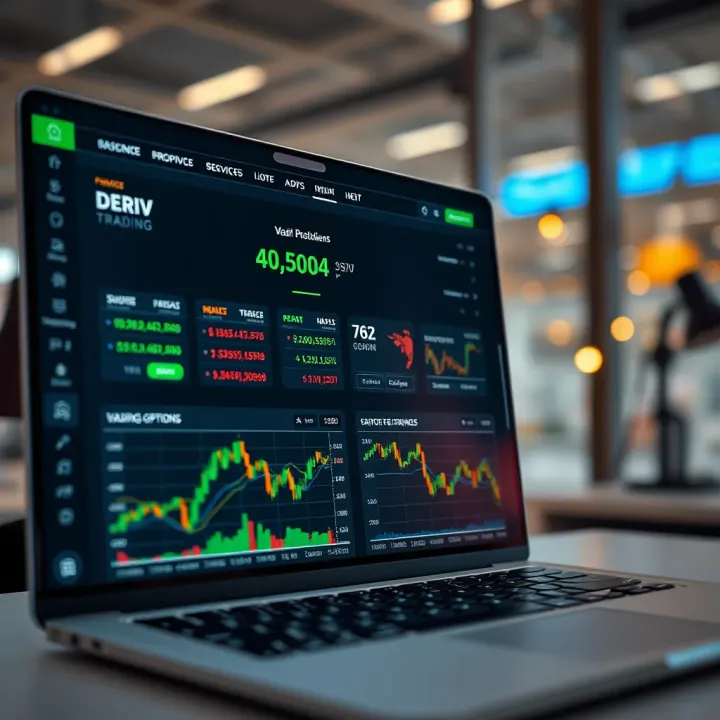
Explore how Nigerian traders can master TradingView 📈 and Deriv.com 💹 with tips on strategy, setup, and risk management for smarter trading moves.

📱Explore Nigerian binary trading apps with insights on features, risks, strategies, and tips to pick a trustworthy platform for smarter trading decisions.

Explore binary options trading in Nigeria 📊 Understand key strategies, risks, rules, and smart tips to trade confidently & manage risks effectively.
Based on 10 reviews